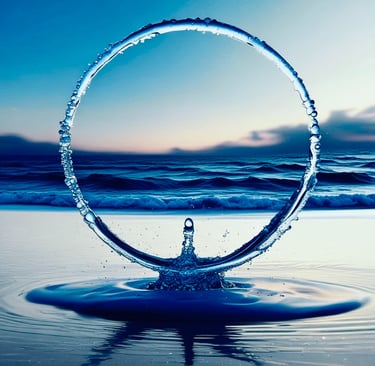




Sustainable water resource management: Strategies to balance human, agricultural and industrial needs


Introduction to Sustainable Water Resources Management
Sustainable water resources management is a crucial aspect of planning and using natural resources in the modern world. With increasing urbanization, climate change, and the overexploitation of these precious resources, it is imperative to develop strategies that ensure a sufficient water supply for all. Indeed, water is a vital commodity that supports not only basic human needs but also agricultural and industrial activities, all of which are crucial for economic development.
Current challenges include population growth, which intensifies the demand for drinking water, and climate change, which disrupts rainfall patterns and reduces water availability. At the same time, intensive agricultural practices and industrialization place additional pressure on already fragile aquatic systems. This underscores the need for a harmonious and integrated approach that considers the various relevant peak water demands.
To achieve this balance, it is vital to promote efficient water use and encourage methods of water conservation and reuse. This can involve techniques such as wastewater recycling, rainwater harvesting, and the adoption of less water-intensive crops in agriculture. Furthermore, raising community awareness of water management issues plays a key role in promoting responsible use.
Sustainable water resource management also requires collaboration between the public and private sectors, as well as citizen involvement, to create a collective awareness of the importance of preserving this precious resource for future generations.
Strategies for Effective Water Management
Water resource management is a crucial issue that requires the adoption of effective strategies to meet diverse human, agricultural, and industrial needs. One recommended practice is rainwater harvesting. By capturing and storing rainwater, communities can reduce their reliance on groundwater sources and water supply networks, contributing to the sustainable management of water resources.
Furthermore, water recycling is a strategy gaining popularity in both urban and rural areas. This process involves purifying wastewater so that it can be reused for non-potable applications such as garden irrigation or vehicle washing. This not only reduces the demand for freshwater but also decreases the volume of wastewater discharged into the environment.
Wastewater treatment is another essential component of effective water management. Modern treatment facilities can transform wastewater into a valuable resource, promoting a more circular water use cycle. By integrating these systems into existing infrastructure, cities and industries can often meet their water needs more efficiently while protecting local water resources.
Finally, the use of advanced technologies such as soil moisture sensors and precision irrigation systems is essential. These technologies allow for real-time monitoring of soil moisture and for adjusting the volume of water applied to crops according to their specific needs. This targeted approach not only improves agricultural efficiency but also contributes significantly to water resource conservation.
Regulations and Public Policies for Sustainable Water Management
Sustainable water resource management relies heavily on effective legislation and appropriate public policies. Governments play a crucial role in establishing regulations to protect watersheds and ensure responsible water use. These regulations must be designed to limit negative impacts on water resources while meeting the growing needs of human populations, the agricultural sector, and industry.
It is essential that established regulations take into account the diversity of water users and local specificities. For example, developing standards for water quality, extraction and reuse volumes, and irrigation practices can promote a balanced approach. Policies should also encourage waste reduction and the promotion of water-saving techniques, particularly in agriculture where the need for

Do you have a project, a question, or a need for a study?
Contact us and let's discuss the most suitable solution for your situation.
© 2025. All rights reserved.
Reliable water, every day.
CONTACT :
Email : contact@bluwtec.com
WhatsApp : +33 766 993 520
Mail : BluWtec - WIP :
10 rue du Président Wilson
92300 Levallois-Perret
France