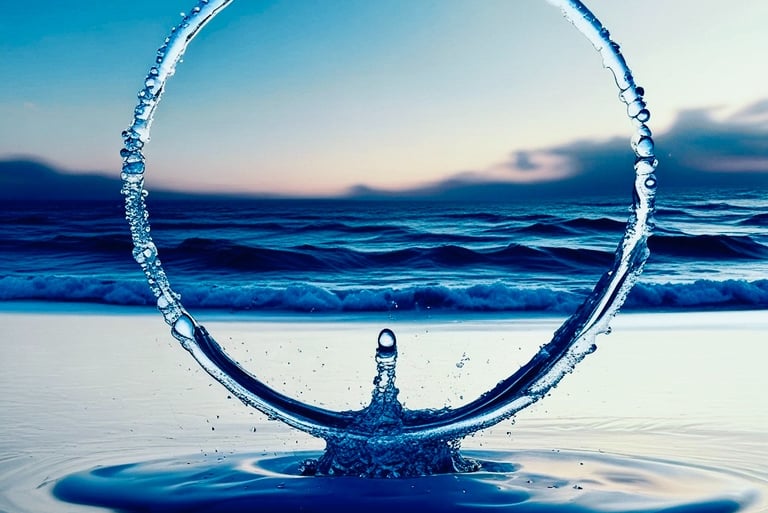




Technology at the service of water
Our containerized reverse osmosis plants rely on robust and proven technologies, combined with automation solutions. The goal is to guarantee consistent water quality, simplified operation, and controlled costs.
Desalination
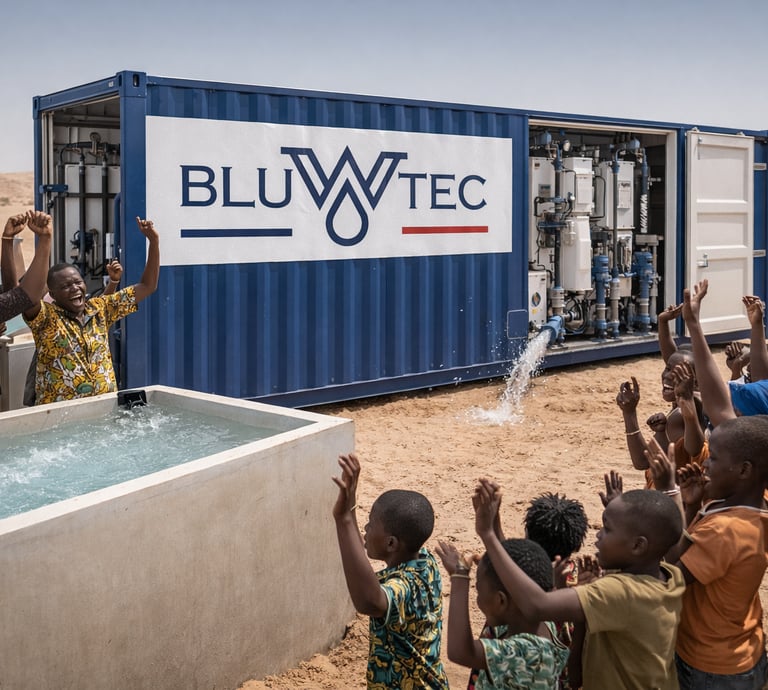
When climate change and water stress affect one-third of humanity, desalination proves to be a strategic tool and an alternative to resource scarcity, provided its carbon footprint and the management of saline discharges are controlled. Sometimes, it is the only solution for ensuring consistent access to drinking water.
It guarantees water supply, even during periods of drought, in arid regions, increasing or supplementing available resources with high-quality freshwater.
When seawater covers 71% of the Earth's surface and represents 97% of the planet's water volume, desalination transforms seawater or brackish water into a vital and usable resource.
The Principle of Reverse Osmosis
Reverse osmosis is a membrane separation process that removes dissolved salts and a large portion of pollutants from water. By applying a pressure greater than the osmotic pressure, water is forced through a semi-permeable membrane, which retains the majority of salts, bacteria, and organic molecules.
The result is highly purified "permeate" water and a concentrated "waste" of salts and impurities. By adjusting the pressure, configuration, and recycling, we optimize the balance between water quality, efficiency, and energy consumption.
Architecture of a Containerized Plant
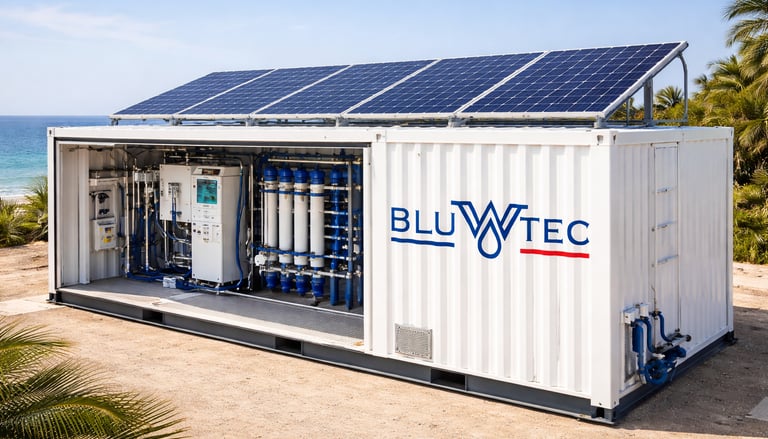
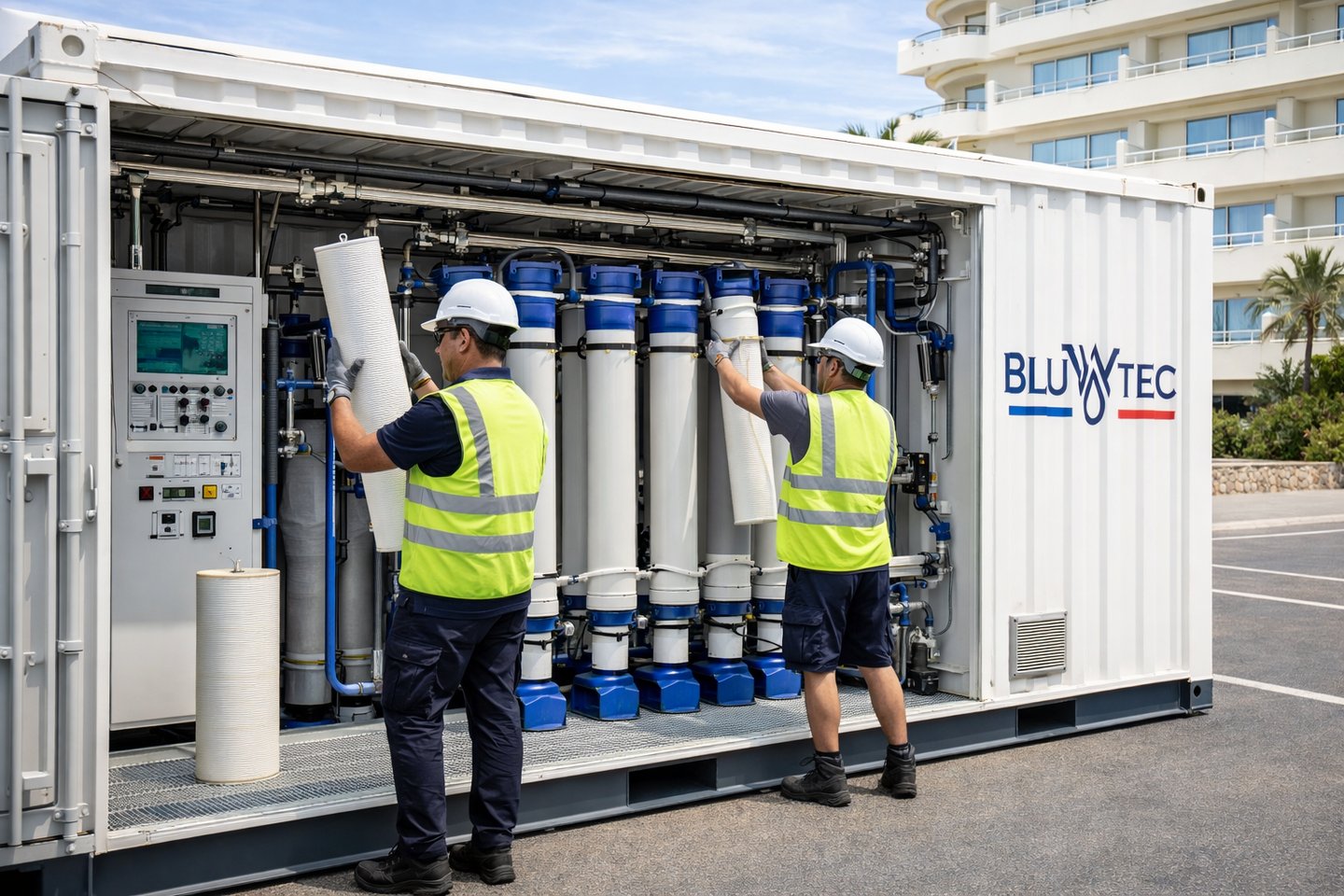
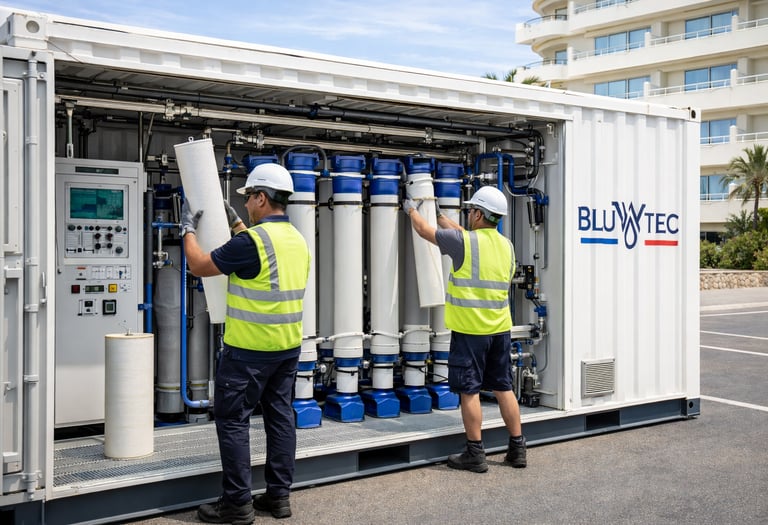
Each containerized plant integrates all the necessary stages within a converted ISO container:
Water Intake and Pretreatment
The raw water is first filtered to remove suspended solids, particles, and, if necessary, some organic matter, using media filters, cartridge filters, activated carbon, prechlorination, or dechlorination, depending on the application. This step protects the membranes and extends their lifespan.
Reverse Osmosis
High-pressure pumps send the pretreated water to the membrane trains. These membranes, sized according to the water's salinity and temperature, perform desalination or demineralization. Key parameters (flow rates, pressures, conductivity) are continuously measured and monitored.
Posttreatment and Adjustments
Depending on the end use, the treated water can be remineralized, disinfected (UV, chlorine), or pH adjusted. For drinking water, we ensure a balanced and pleasant drinking water. For industrial applications, we adjust the quality to meet the equipment's needs.
Integration within a container
The container is designed to guarantee equipment protection and operator comfort: insulation, ventilation or air conditioning, lighting, and easy access to key components. The entire unit is compact, transportable, and simple to install.
Automation, supervision & data
Our stations are equipped with advanced control systems:
Programmable Logic Controller (PLC) and Operator Interface
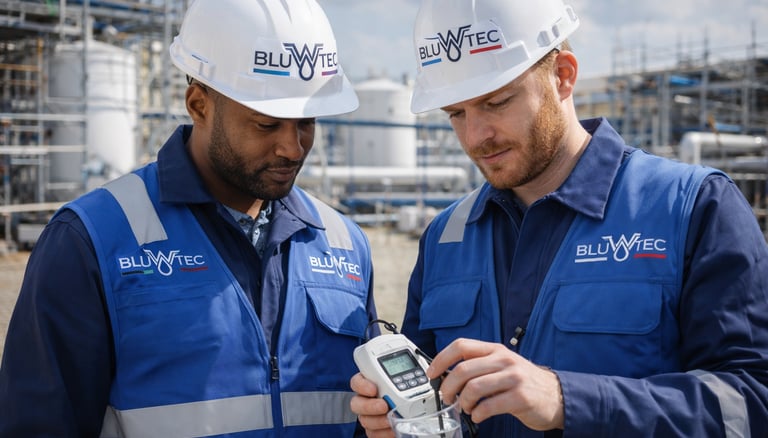
A PLC manages the various operating sequences (start-up, rinsing, production, shutdown) and controls thresholds and alarms. A user-friendly interface allows operators to monitor the system's status in real time.
Remote Monitoring and Supervision
Optionally, system data can be remotely transmitted: flow rates, pressures, conductivity, consumption, and alarms. This facilitates support, preventive maintenance, and ongoing optimization of settings.
Safety and Traceability
Events and key values can be logged, facilitating regulatory compliance for local authorities and continuous improvement initiatives for industrial companies. In the event of a malfunction, the system shuts down and alerts the operator.
“Water is becoming the number one geopolitical issue of the 21st century.”

Energy efficiency and sustainability
Particular attention is paid to energy optimization: choice of high-performance pumps, energy recovery from seawater, fine adjustment of pressures and flow rates.
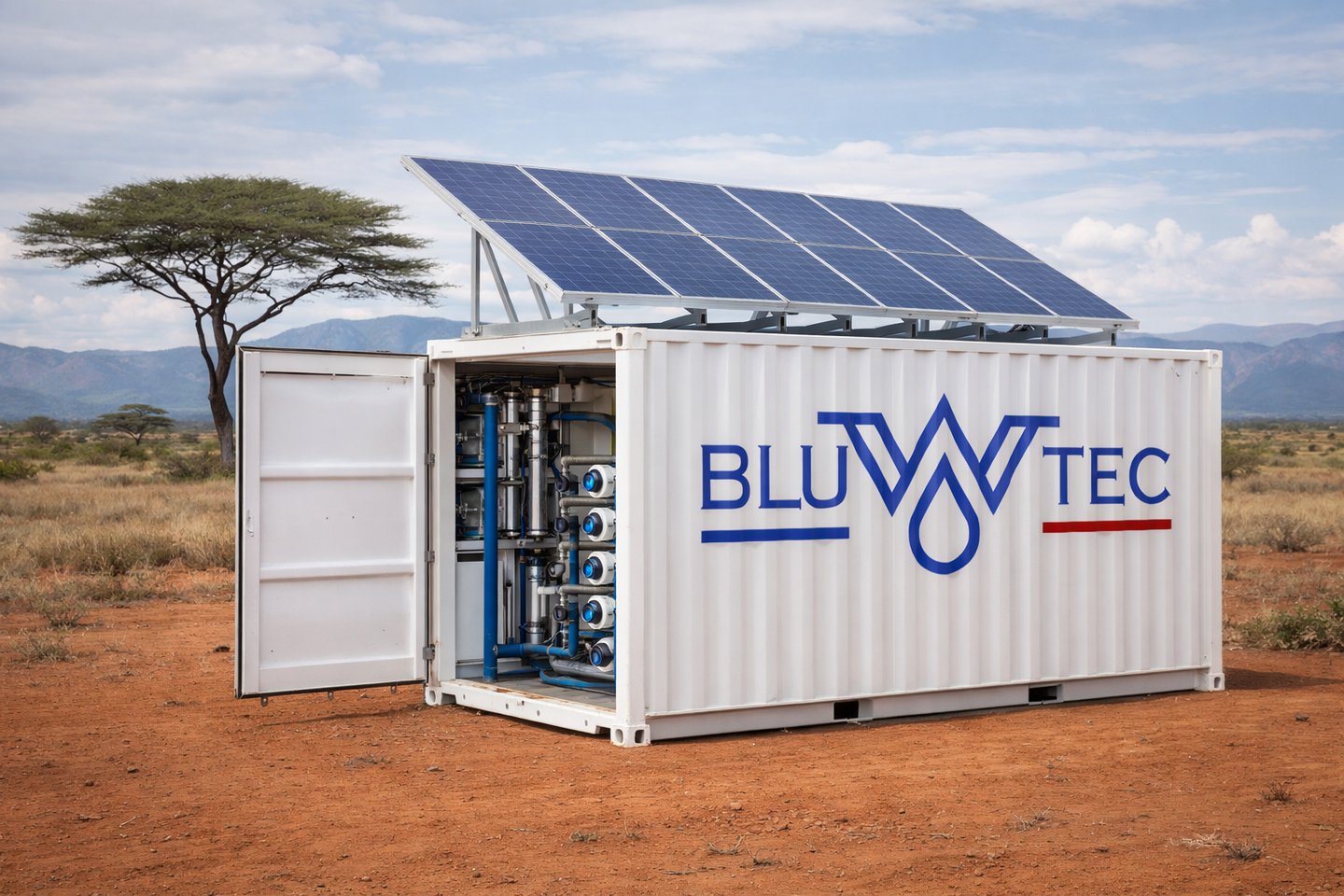
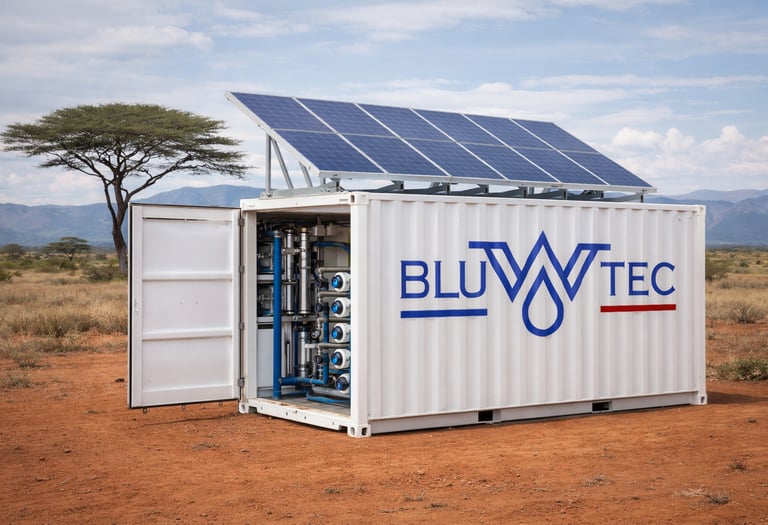
Finally, and most importantly, we offer solar panel power solutions: in all circumstances, users benefit from an efficient long-term solution, economically and environmentally.
Furthermore, careful pretreatment design and precise control help to reduce the need for chemicals and extend the lifespan of membranes.
Suscribe
Receive our news and advice about water
Contact
Do you have a project, a question,
or a need for a study?
Contact us and let's discuss
the most suitable solution
for your situation.
Email :
contact@bluwtec.com
© 2025. All rights reserved.